|
|
|
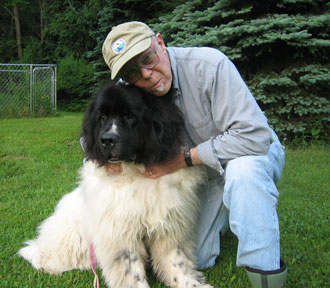
ROBERT HUOT (1)
Website: http://www.roberthuot.com ROBERT HUOT Born 16 September 1935, Staten Island, NY Education BS Chemistry, Wagner College, Saten Island, NY 1957 Employment Pigment Chemist, Sun Chemical, 1957-58, 1960-62 US Army, 1958-60 Plant Manager, Neti Art Color, 1962-63 Professor of Art, Hunter College , 1963-91 ONE PERSON SHOWS 1964 May Steven Radich Gallery, New York 1965 March Steven Radich Gallery, New York 1966 March Steven Radich Gallery, New York 1966 October Steven Radich Gallery, New York 1967 January Galerie Muller, Stuttgart, Germany 1968 May Galerie Renée Ziegler, Zürich, Switzerland 1968 Sept Galerie Muller, Stuttgart, Germany 1968 November Galerie Schmela, Düsseldorf, Germany 1969 April Paula Cooper Gallery, New York 1970 March Galerie Renée Ziegler, Zürich, Switzerland 1973 January Paula Cooper Gallery, New York 1976 January State University of NY, Albany, NY 1979 February Utica College, Utica, NY 1980 November Hetzler Galerie, Stuttgart, Germany 1982 Barret Gallery, Utica College, Utica, NY 1984 Barret Gallery, Utica College, Utica, NY 1995 February Earlville Opera House, Earlville, NY 1998 May CCCA Gallery, Norwich, NY 1998 October Times Square Gallery, Hunter College, NY 2006 October "Four Decades in Many Media" Arnaud Lefebvre Gallery, Paris 2009 Robert Huot, Carol Kinne, "4 Carols +", Arnaud Lefebvre Gallery, Paris 2010 Robert Huot, Carol Kinne "Red Classic", Ivana de Gavardie Gallery, Paris Films, Arnaud Lefebvre Gallery, Paris 2011 Robert Huot Carol Kinne "In Parts", Ivana de Gavardie Gallery, Paris 2013 "DIARIES", Arnaud Lefebvre Gallery, Paris 2014 "For Seth", Arnaud Lefebvre Gallery, Paris 2016 HOMMAGE À CAROL KINNE (Carol Kinne & Robert Huot), Arnaud Lefebvre Gallery, Paris GROUP SHOWS (SELECTION) 1964 8 Young Artists, Hudson River Museum, Yonkers, NY 1966 Systemic Painting, Guggenheim Museum, NYC 1966 Albright-Knox Art Gallery, Buffalo, NY 1967 International Young Artists Exhibit, Tokyo, Japan 1967 Painting Annual, Whitney Museum, NYC 1967 Rejective Art, AFA, NYC 1968 Rejective Art, NYC 1968 New Art USA, Modern Art Museum, München, Germany 1968 The Art of the Real, MOMA, NYC 1969 Traveled to Musée d’Art Moderne, Paris ; Kunsthalle, Zürich, Tate Gallery, London 1969 1969 March 1969, NY 1969 Concept, Vassar College, Poughkeepsie, NY 1969 Wall Show, Ace Gallery, Los Angeles, CA 1969 Painting Annual, Whitney Museum, NYC 1969 557087, Seattle Art Museum, Seattle, WA 1970 Modular Painting, Albright-Knox Gallery, Buffalo, NY 1970 Hanging/Leaning, Hofstra University, Long Island, NY 1973 New Space, Paula Cooper Gallery, NYC 1974 Sense of Scale, Lowe Gallery, Syracuse University, Syracuse, NY 1975 Autobiographical Art, Colgate University, Hamilton, NY 1978 Two-person show (Huot-Kinne), 96 Grand St. Gallery, NYC 1978 Recent Acquisitions, M.O.M.A., NYC 1981 Art and Ecological Issues, 22 Wooster St. Gallery, NYC 1983 New Works, Paula Cooper Gallery, NYC 1986 Frames of Mind, Munson Williams Proctor Institute, Utica, NY 1987 Grass Roots, Gallery 53, Cooperstown, NY 1988 Traveled to Grovsner Gallery, SUNY, Cobbleskill, Cobbleskill, NY 1988 Agriculture Museum, New York State Fair, Syracuse, NY 1988 20th Anniversary Show, Paula Cooper Gallery, NYC 2004 A Minimal Future ? Art as Object 1958-1968, Museum of Contemporary Art, Los Angeles, CA 2006 Plane/Figure, American Art in Swiss Collections, Kusntmuseum Winterthur, Switzerland 2006-17 Arnaud Lefebvre Gallery, Paris 2016 “Figure Painting” Alexander/Heath Contemporary, Roanoke, Virginia 2018 Robert Huot / Katy Martin, Arnaud Lefebvre Gallery, Paris OTHER 1978 January New York Artists and Writers Tour of China 1979-1980 Production and NYC Subways Exhibition ( January-February, 1980) of No Nukes is Good Nukes 1983 Production of This Is Ground Zero poster New York, New York Edition. Exhibited in NYC subways July-August, 1983 1984 Production of This Is Ground Zero poster Utica, New York Edition. Benefit Peter Watkins’ War Game 2 project 1987 Curator, Fritz Bultman Exhibition, Gallery, Hunter College, NYC COLLECTIONS The Museum of Modern Art, NYC The Museum of Contemporary Art, Los Angeles FNAC, Paris Musée de Picardie, Amiens, France MAJOR GRANTS 1966 National Endowment for the Arts – Painting 1977 National Endowment for the Arts – Visual Arts in the Performing Arts : Twyla Tharp Dance Foundation and Robert Huot. 1984-85 PSC BHE CUNY Research Award 1986-87 PSC BHE CUNY Research Award 1998 Special Opportunity Stipends Grant, Upper Catskill Community Council of the Arts and NYFA THEATER DESIGN 1965-70 Designer of Sets, Costumes, and Properties 1980 Sets and Appearances with Twyla Tharp Dance Co., Dayton, Ohio and NYC PERFORMANCE Dawn of Chameleon In 1976 Bob Huot wrote a sketch for a musical review called The Mercenaries. This review focused on ecological, social and sexual politics. The approach was somewhat Brechtian, in that all things occurred openly (i.e. change of sets, costumes, props, etc. from number to number)—a live band, performers and TV Monitors would all be on stage. There was one problem—no music. The Mercenaries was shown around and many were enthusiastic, but still no music. In the summer of 1980 Keith Aoki, Tim Grajek and Bob Huot started playng music together at a party. They began too work on a few songs from The Mercenaries. This was the dawn of Chameleon. Bob, Keith and Tim remained the core of the group and wrote many of the songs. A few drummers, singers and bass players came and went until the band jelled with : Tim Grajek, lead vocals and guitar ; Bob Huot, vocals, trumpet and percussion ; Keith Aoki, guitar and violin ; Hank Stahler, bass guitar and percussion ; Jeff Bruner, keyboard and arrangements and Kevin Norton, on drums. The band cooked! Soon Bruner and Stahler were adding to the brew. Carol Kinne, Margaret Fox and Kat Isaakson also contributed as set makers, performers, and super-roadies. Chameleon played at clubs, colleges, theaters, hotels, museums and art galleries. Considered an “art band” each performance included at least one set, in costume, on a specific theme. As a performance group, Chameleon produced a number of shows including The Evening News and Spaceland. Chameleon stayed together for ten years (1980-1990). Tim, Hank and Bob still play together occasionally. Jacket of CD: Chameleon (Huot 339 Spurr Street, New Berlin, NY 13411, www.roberthuot.com), 2006 1981 22 Wooster St. Gallery, NYC 1981, 87 Hunter College, NYC 1982 Beat N Path, Hoboken, New Jersey 1982 Cooper Hewitt Museum, NYC 1982 Martin Luther King Hall, NYC 1982, 85, 86 Millenium, NYC 1984 Utica College, NYC 1984 The Dive, NYC 1984 Franklin Furnace, NYC 1984, 85, 87 Gallery 53, Cooperstown, NY 1985 ABC No Rio, NYC 1985, 1988 Sculpture Space, Utica, NY 1985 Spring Lake Hotel, Spring Lake, NJ 1986 Colgate University, Hamilton, NY 1987 Bard College, Annandale-on-Hudson, NY OTHER PEFORMANCES 1963 War, with Robert Morris, Judson Memorial Church, NYC 1968 Angry Arts, Hunter College, New York, NY FILMS Leader, 1967, 16mm, 12 min., Color Silent Scratch,1967, 16mm, 11 min., B/W (noir et blanc), Silent From Loops, 1967, 16mm, 6 min., B/W, Silent Spray, 1967, 16mm, 11 1/2 min. B/W, Silent Redstockings, 1967-69, 16mm, 3 min. Color, Silent Cross Cut – A Blue Movie, 1968-69, 16mm, 1 min., Color, Silent Black and White Film, 1968-69, 16mm, 12 1/2 min., B/W, Silent One Year 1970, 1970-71, Diary, 16mm, 150 min., B/W and Color, Silent Turning Torso Draw Down, 1971, 16mm, 16 min., B/W and Color, Silent TSLOAAAYM, 1971, 16mm, 6 min., B/W, Silent Rolls 1971, 1971-72, Diary, 16mm, 100 min., B/W and Color, Silent Strip, 1971-72, 16mm, 12 min., Color Silent Third One Year Movie, 1972-73, Diary, 16mm, 70 min., Color, Silent Fourth Diary Film, 1973-74, Diary, 16mm, 50 min., Color, Silent Beautiful Movie, 1975, 16mm, 5 min., Color, Silent China 1978, 1978, Super 8mm, 50 min., Color with live commentary, separate sound track, and 35mm color slides Diary of 1974-75, 1974-75, Diary, 16mm, 80 min., Color with wild sound environment Fades and Close-Ups, 1978, Super 8mm, 7 min., B/W, Sound Super 8 Diary 1979, 1979-80, Diary, Super 8mm, 3 hrs. 20 min., B/W and Color, Sound Erotic Trilogy, 1980, Super 8mm, 11 min., B/W and Color, Sound Cum Foo, 1980, Super 8mm, 12 min., B/W and Color, Sound Diary 1980, 1980-81, Diary, Super 8mm, 3 hrs., B/W and Color, Sound Dr. Faustus’ Foot Fetish, 1980-81, Super 8mm, 22 min., B/W and Color, Sound 1983 Diary, 1983-84, Diary, Super 8mm, 55min., 5 reels-5 projectors, B/W and Color, Sound Kai Study, 1983-84, Super 8mm, 3 min., Color, Sound Hollis Frampton 1936-1984, 1984, Supr 8mm, 9 min., Color, Sound Films available in DVD : Redstockings ; Cross Cut – A Blue Movie ; Black and White Film Third One Year Movie Hollis Frampton FILM SCREENINGS 1973 Sept Festival of Independent Avant-Garde Film, London 1974 April Paula Cooper Gallery, NYC 1975 March Millenium, NYC 1978 December Visiting Film Artist, SUNY, Binghampton, NY 1979 February Millenium, NYC 1979 April Utica College, Utican NY 1979 November Visiting Film Artist, Colgate University, Hamilton, NY 1980 February Visiting Film Artist, Utica College, Utica, NY 1980 March Visiting Film Artist, Cinematheque, San Francisco, CA 1980 April Visiting Film Artist, Encounter Cinema, UCLA, Los Angeles, CA 1980 April Visiting Film Artist, Oasis Cinema, Los Angeles, CA 1980 December Kommunales Kino, Stuttgat, Germany 1981 Sept Swamp El Paso, El Paso, TX 1981 October University of New Mexico, Albuquerque, NM 1982 May Millenium, NYC 1982 December Munson Williams Proctor Institute, Utica, NY 1983 January Rising-Sun Media Center, Santa Fe, NM 1983 January Cinematheque, San Francisco, CA 1983 January Pasadena Film Forum, Pasadena, CA 1983 February Artery, Denver, CO 1983 April Utica College, Utica, NY 1984 November Colgate University, Hamilton, NY 1992 May-June Film Retrospective, Anthology Film Archives, NYC 1993 April BERK Filmakers, Reading, PA 1998-99 MOMA Big As Life : American History of 8mm Film, NYC 2007 Film Retrospective, Anthology Film Archives, NYC BIBLIOGRAPHY Fried, Michael “New York Letter”, Art International, Summer 1964, p. 82 Nochlin, Linda. “New Directions 1964”, 1964 Goosen, E.C. “8 Young Artists”, Oct. 1964 Judd, Donald. Art International, May 1965, pp. 64-65 Art Voices, Spring 1965, p. 111 Exhibition at Radich Gallery, Arts Magazine, W. Berkson, May 1965, 39:68 Exhibition a Radich Gallery, Art News, May 1965, 64:46 Rose, Barbara. Art in America, October 1965, 53:59 Alloway, Lawrence “Systemic Painting”, 1966 Art Forum, November 1966, pp. 42, 44 Exhibition at Radich Gallery, Arts Magazine, May 1966, 40:62 Exhibition at Radich Gallery, Art News, December 1966, 65:12 Exhibiton at Radich Gallery, Art News, April 1966, 65:16 Sommer, E. “Muller Show”, Art International, May 1967, pp. 48-49 (ill.) Robert Huot, catalogue, Galerie Renée Ziegler, Zürich, Switzerland, 1968 (ill.) Gossen, E.C. : The Art of the Real : USA 1948-1968, New York, 1968 Battcock, G. : Minimal Art : A Critical Anthology, New York, 1968 Schlejeldahl, P. “New York Letter”, Art International, Summer 1969, 13:67 Plagens, P. “557,087 at the Seattle Art Museum”, Art Forum, Nov. 1969, 8:65 Robert Huot at Paula Cooper, catalogue, Paula Cooper Gallery, 1969 (ill.) Wasserman, E. Exhibition at Paula Cooper Gallery, Art Forum, Summer 1969, il 7:64-65 Exhibition at Paula Cooper Gallery, Art News, May 1969, 68:69 Glueck, Grace “A Clean, Well Lighted Room”, The New York Times, 27 April 1969 Rose, Barbara. “The Politics of Art, Part II”, Art Forum, Jan. 1969, p. 45 (ill.) Bob Huot, catalogue, Galerie Renée Ziegler, Zürich, Switzerland, 1970 R.M. Murdock, Modular Painting, catalogue, Buffalo, N.Y., 1970 McDonagh, Don : The Rise and Fall and Rise of Modern Dance, Outerbridge & Deinstfry, 1970, pp. 112, 301, 310-311 Frank, P. “Paula Cooper Gallery, New York”, Art News, March 1973, 72:76 Robert Huot : Diary, catalogue, New Berlin, NY, 1973 Robert Huot : Films, catalogue, New Berlin, NY, 1974 Robert Huot : Diary Paintings, catalogue, text by Robert Huot, Essays by Lucy Lippard, Eunice Lipton, Don McDonagh, University Art Gallery, State University of New York, Albany, NY, 1976 (ill.) “The Geography of Street Time : A Survey of Street Works Downtown.”, Lucy Lippard, pp. 192, 194, 282, and “Square Map Soho”, R. Block, p. 16, New York – Downtown Manhattan Soho, Akadame der Kunste Berliner Festrochen, 1976 Wall Painting, catalogue, Chicago, p. 5, 1979 Mac Donald, Scott. Afterimage, vol. 6 no. 9, , April 1979, pp. 9-10 Robert Huot : Diaries, catalogue, Essays by Lucy Lippard, Scott MacDonald, Utica College, Utica, NY, 1979 (ill.) MacDonald, Scott. “An Interview with Robert Huot”, Afterimage 7, no 7, February 1980, pp. 8-12 Robert Huot, Allianz 8, catalogue, Galerie Hetzler, Stuttgart, Germany, 1980 Robert Huot : Forms of Motion, An Exhibition of Pre-Cinema Devices, catalogue (flip book), text by Robert Huot, Essay by Scott MacDonald, Utica College, Utica, NY, 1982 Robert Huot : Paintings from the 90s, catalogue, text by Robert Huot, Essay by Mary E. Murray, Scott MacDonald, Times Square Gallery, Hunter College of The City of New York, 1998 (ill.) Huot, Robert. “L’art du contexte/Le contexte de l’art 1969-1990. Une réponse autobiographique”, Art Press, special issue n° 17, 1996, pp. 66-68 99 Artists from the Marzona Collection, Berlin Press, 2001 Goldstein, Ann : A Minimal Future ? Art As Object 1958-1968, catalogue, The Museum of Contemporary Art, Los Angeles, 2004, pp. 236-241 ; 419 (ill.) Plane / Figure: Amerikanische Kunst aus Schweizer Sammlungen, catalogue, Kunstmuseum Winterthur, Switzerland, 2006 Anthology Film Archives Program, January-March 2007, p. 10. ROBERT HUOT THE ART OF CONTEXT First I have to open the window of time wider. When I think of the issues of art I must go back to 50’s and the days of 10th Street in N.Y.C. I was a young man infatuated with the life of an artist, hanging out with the 10th Street artists—closing the Cedar Bar—talking all night about art and politics—being a rebel yet being part of a cause (what I see now as a growth industry) what I saw then as an intoxicating way of life—bohemian—radical—far different from my father’s six days a week of enslavement. The New York School was in its hey-day and I was a small part of it. I went to every show, every opening and every party. Soon I knew everyone (the art world was smaller then.) I worked in my studio 14 hours a day—made more paintings than anyone I knew—held down a full time job. I didn’t sleep much—just worked and partied. For about a month each year I’d collapse, then build myself up for the next stretch of art and madness. It was great—I was young—I had no one to worry about but me and I didn’t worry much about me—I was an artist—period. So I entered my art life with a kind of religious fervor (though most secular.) I went rapidly from “apprentice” to “journey-man” and began along with many others, to develop a style to rival abstract expressionism—what was soon to be called “minimal art.” Minimal art from my point of view was a style of efficiency—direct—color, shape, size, location, surface and light—what you see is what you get. A reaction to the “automatic writing”, the idiosyncratic nature of the then dominant style of abstract expressionism. We hoped to present the reality of the elements of art as a language that spoke directly to the viewer. These were not new ideas, but they seemed fresh and necessary in the seeming muck of the moment. The context of my entry into the world of art was effected by my friends and teachers. After serving the U.S. Army for two years (1958-60) I studied with artists Fritz Bultman and George Sugarman. At the same time I met Carl Andre, Bob Barry, Hollis Frampton, Bob Morris, Doug Ohlson, and later Twyla Tharp. We were all starting our art lives and shared the fever. Some of us also collaborated on a variety of projects. My “Hard-edge”—“Minimal” paitings were receiving a good reception from the critical and gallery communities. I was showing with Stephen Radich then Paula Cooper in New York, Müller in Germany and Ziegler in Switzerland. I was “successful” but uncomfortable. The Viet Nam War was calling into question my whole way of life. What was the function of my art ? What was my role as an artist, teacher and intellectual ? Was I simply going to go on with business as usual or take some kind of action ? Not only was the Viet Nam War effecting our minds and lives but the Civil Right Movement was reshaping our world . There was no way to avoid the implications presented by these events. We participated in anti-war and civil rights demonstrations. We formed organizations like the Art Workers Coalition and took a variety of actions including the Mai Lai Poster and demonstrations against the War and for greater participation of women and African-Americans in the Art Establishment. All of this had to effect our art and our whole sense of ourselves. Clearly the context for art making was not the same as it had been a few years earlier. By the late 60’s I had become more and more involved with filmmaking and I had stopped making “regular paintings” (paintings on stretchers that could be transported and sold in galleries.) My art became more and more “dematerialized” or “conceptual” and this transformation had strong political implications. By not making regular art commodities I felt I was helping destabilize the art establishment (I had withdrawn from the galleries I’d been associated with.) I was saying NO to art as usual (at least in my own mind.) I felt artists had to take control of their art and not allow the “power elite” of the art world control it for them and do with it as they wished. It seemed (and seems) to me that art in general serves the interest of the ruling class and for me (a member of the artisan class) this was and is unacceptable. So I “dropped-out” and became involved in an “alternate-lifestyle.” In 1969 I put a down payment on an old farm in upstate New York and on a cold January we moved in. I tried as much as possible to be self sufficient—live off the land, garden and hunt. At this time Twyla Tharp and I were married. We soon had a son Jesse. Farm and family had a profound effect on my life. After being so involved in the art world both as a gallery artist (I had the good fortune to have Steve Radich, Paula Cooper, Hans Müller, Renée Ziegler and Seth Siegelaub as my champions) and an activist (I was a founding member of the Art Workers Coalition and a participant in the anti-war movement) this was indeed a change of context. After producing some of the most extreme, dematerialized, distilled and almost invisible art in the late 60’s, in January 1970 (coincidentally) I began a film diary which allowed anything and everything to enter. I had been working with film since 1966 (Hollis Frampton shared his editing bench with me.) The early films were minimal (made from leader and found footage.) The diary films were documents of everyday life—work and play—not in anyway adjusted aesthetically—when the camera was set up and turned on what ever happened, happened. When these diaries were begun I had no intention of showing them publicly. They were made simply to act as a tool of observation. Yet, as open ad unpreconceived as they may have been, they still existed in an aesthetic context. I could not free myself completely, I was in a sense a victim of my history. The diaries were a kind of meta-art existing in a space somewhere outside of film and paintings yet somehow connected. In March 1970 I began a series of diary paintings. They too were made as a tool to help me see again, again with no intention of public exhibition. I hoped to live and work as much as possible outside the confines of society as I had known it. Paradoxically my retreat from the metropolis to rural life (a radical act) brought me to a reaffirmation of many aspects of traditional values. I began to re-examine my whole relationship to life (as I perceived it.) Family, teaching and the environment became my preoccupations. I eschewed the traditional art world. I avoided all galleries and museums, (except the alternate and noncommercial spaces.) I set as my goal to make a body of work that existed outside the confines of the art world as I knew it. All of this to take place on a farm in central New York State, far from the convolutions of the metropolis. Slowly the impact of my choices began to effect my art in a concrete way. The diary films became more and more a celebration of “nature”. As my awareness of my/our impact on the environment grew I felt compelled to make my art and life reflect that knowledge. At this time my marriage with Twyla ended. This threw me into a state of reckless depression. Drugs and womanizing were my life. But, soon two people entered my life who put me back on track. Carol Kinne and Klaus Stoscheck gave me the friendship and direction that I needed. Carol was also teaching in the art department at Hunter. Our friendship developed into a love relationship that lasts to this moment. Klaus had devoted himself to the study of Native American Cultures and ecologically progressive forms of farming and gardening. They both came to stay at the farm and we three began together and separately to embark on actions that would profoundly effect our lives. Carol bought a small farm nearby with a tiny inheritance from her mother who had just died. We worked together on a variety of farm and art projects and we continue to do so to this moment. We traveled together with a group of artists and writers to China in 1977. On our return we presented a multi-media show including a China Diary composed of film, slides, taped music and live commentary. Carol has been a major contributor to my film activities both in the diaries and a series of short works produced in the late 1970’s. Our next major project was a series of anti-nuke posters that appeared in the New York subways. This led us to mount the first “environmental art” exhibition in 1981. Klaus Stoscheck had began an art and anthropology student at Hunter College. He studied with both Carol and me. While he lived with us at the farm we started garden, which he supervised, using raised beds and intensive gardening techniques he developed. This led soon to start an organic farm in Van Etten , New York. He and his mother purchased a farm on the Kaiyutah Creek in south western New York State. They were soon joined by his brother, two sisters and a group of friends. They formed a coop which became a model for all those who came in contact with their adventure. Klaus took the name Kaiyutah Clouds and worked first with the Akwisasni in Canada and then went south to Guatemala to aid the Mayas after the 1976 earthquake. He spent the next four years in Guatemala working with the Cakchiquel Maya making brief trips to the U.S. to raise money to aid in the formation of agricultural coops. In October 1980 he was murdered by a government death squad for his progressive activities. This led us to produce a film called KAI as a memorial to this fine young man. KAI was completed in 1989. In late 1980 Keith Aoki, Tim Grajek and I formed the Chameleons, a music and performance group. We have been working with Jeff Bruner, Hank Stahler, Carol Kinne and many others to produce songs, performances pieces, audio and video tapes often with a strongly political direction. We continue the association today. The context of art/the art of context 1969-1990 evokes the richest period of my life. My art and my sense of self have changed tremendously yet I feel strangely the same person. I have managed to produce art that reflects the changing contexts of my view of the world. I think my position has become that of an amateur regarding art. I wished to try everything and to a degree have done so. I tried to put myself in a position to make only what I wanted to make. Fortunately, I have a good job which allows me to be my own patron so to speak. I have been able to live as an “educrat” with relative freedom, teaching in the New York City Public University System, in a progressive atmosphere. I feel most fortunate. My son Jesse is healthy and happy. He has begun working as production assistant for an excellent producer. My wife Carol and I are in good health and have enough to do for two life times each. With the joy there is a sadness of maturity. I remember my naïveté—the simplicity of views—my dreams. I believed art could change the world and I continue to hope it can make a contribution. Art has certainly provided a way (in the Zen sense) for me to structure my energies. But I guess I feel we progressive artist lost a chance in this period to make a greater impact. In this country by not doing the day to day mundane business of politics we allowed the “religious” right to take power. In the vacuum we left. We are faced with censorship not equaled since the Mc Carthy era. Though women, African-Americans and others have assumed roles of power, the same good old boy net-work calls the shots. There is no energy policy, public schools decay, the inner cities collapse, racism and violence increase and yet our only mobilization is a war machine to fill the vacuum of vision in domestic and foreign policy. Is it any wonder we all feel a sense of sadness and helplessness? Isn’t it time to mobilize art again? Isn’t it time to release all the powers of human creativity to live symbiotically in this solar system? On my fifty fifth birthday, the 16th day of September 1990, Columbus, New York, Robert Huot. ROBERT HUOT L’ART DU CONTEXTE D’abord je dois ouvrir plus grand la fenêtre du temps. Quand je pense aux problèmes de l’art je dois revenir aux années 50 et aux jours de la 10e rue à New York City. J’étais un jeune homme qui aimait éperdument la vie d’artiste, traînant avec les artistes de la 10e rue — faisant la fermeture du Cedar Bar — discutant toute la nuit d’art et de politique — étant un rebelle et pourtant prenant part à une cause (ce que je vois maintenant comme une industrie en expansion) ce que je voyais alors comme une façon de vivre enivrante — bohémienne — radicale — très différente de l’asservissement à six jours par semaine de mon père. L’École de New York était à son apogée et j’en étais une petite partie. J’allais à chaque exposition, chaque vernissage, et chaque réception. Bientôt je connaissais tout le monde (le monde de l’art était plus petit alors). Je travaillais dans mon atelier 14 heures par jour — faisais plus de peintures que n’importe qui d’autre de ma connaissance — occupant un travail à plein temps. Je ne dormais pas beaucoup — ne faisait que travailler et aller à des réceptions. Pendant environ un mois chaque année je m’écroulais, puis me remettais sur pied pour la prochaine ligne droite d’art et de folie. C’était formidable — j’étais jeune — je n’avais à m’inquiéter de personne que de moi et je ne m’en inquiétais pas beaucoup — j’étais un artiste — point. Donc j’entrais dans ma vie d’art avec une sorte de ferveur religieuse (bien que très séculaire). Je passais rapidement « d’apprentis » à « compagnon » et commençais en même temps que beaucoup d’autres, à développer un style pour rivaliser avec l’expressionnisme abstrait — ce qui devait bientôt être appelé « minimal art ». L’art minimal de mon point de vue était un style d’efficacité — direct — couleur, forme, taille, emplacement, surface et lumière— ce que vous voyez est ce que vous obtenez. Une réaction à « l’écriture automatique », la nature idiosyncrasique du style dominant alors de l’expressionniste abstrait. Nous espérions présenter la réalité des éléments de l’art comme un langage qui parlerait directement au spectateur. Cela n’était pas des idées nouvelles, mais elles semblaient fraîches et nécessaires dans le bourbier apparent du moment. Le contexte de mon entrée dans le monde de l’art fut donné par mes amis et professeurs. Après avoir fait mon service dans la US Army pendant deux ans (1958-1968) j’ai étudié avec les artistes Fritz Bultman et George Sugarman. En même temps j’ai rencontré Carl Andre, Bob Barry, Hollis Frampton, Bob Morris, Doug Ohlson et plus tard Twyla Tharp. Nous démarrions tous notre vie d’art et partagions la même fièvre. Quelques-uns d’entre nous aussi collaboraient sur un certain nombre de projets. Mes peintures « Hard-edge » — « minimales » reçurent un bon accueil des communautés de critiques et de galeries. J’exposais avec Stephen Radich puis Paula Cooper à New York, Muller en Allemagne et Ziegler en Suisse. J’avais du « succès » mais ne me sentais pas à l’aise. La guerre du Vietnam mettait en question toute ma façon de vivre. Quelle était la fonction de mon art ? Quel était mon rôle en tant qu’artiste, enseignant et intellectuel ? Est-ce que j’allais simplement continuer mes affaires comme d’habitude ou me mettre à agir d’une façon ou d’une autre ? Non seulement la guerre du Vietnam avait une répercussion sur nos esprits et nos vies mais les mouvement des droits civils redessinait notre monde. Il n’y avait aucune manière d’échapper aux implications présentées par ces évènements. Nous participions aux manifestations contre la guerre et pour les droits civils. Nous formions des organisations comme l’Art Workers Coalition et firent différents types d’actions dont l’affiche Mai Lai et des manifestations contre la guerre et pour une plus grande participation des femmes et des Africains-Américains dans le système établi de l’art. Tout cela devait produire un effet sur notre art et notre sens global de nous-mêmes. Il était évident que le contexte pour faire de l’art n’était pas le même qu’il avait été peu d’années auparavant. Vers la fin des années 60, j’étais devenu de plus en plus impliqué dans le tournage de films et j’ai dû arrêter de faire des « peintures ordinaires » (des peintures sur toile qui puissent se transporter et se vendre en galerie). Mon art devint de plus en plus « dématérialisé » ou « conceptuel » et cette transformation avait de fortes implications politiques. En ne faisant pas des marchandises d’art ordinaires je sentais que j’aidais à déstabiliser le système établi de l’art (je m’étais retiré des galeries avec lesquelles j’étais associé). Je disais NON à l’art-comme-d’habitude (du moins dans mon propre esprit). Je sentais que les artistes devaient prendre le contrôle de leur art et ne pas permettre à « l’élite au pouvoir » du monde de l’art de le contrôler pour eux et d’en faire ce qu’ils avaient envie. Il me semblait (et me semble) que l’art en général sert les intérêts de la classe dirigeante et pour moi (un membre de la classe artisan) ce n’était, et ce n’est, pas acceptable. Donc j’avais « laissé tomber » et me suis impliqué dans « un mode de vie alternatif ». En 1969 j’ai versé un acompte sur une vieille ferme dans le haut de l’État de New York et par un froid mois de Janvier nous avons emménagé. J’ai essayé autant que possible d’être autosuffisant — vivre de la terre, du jardin et de la chasse. À cette période Twyla Tharp et moi étions mariés. Nous avons bientôt eu un fils Jesse. La ferme et la famille ont eu un profond effet sur ma vie. Après avoir été aussi impliqué dans le monde de l’art à la fois comme artiste de galerie (j’avais eu l’heureuse chance d’être défendu par Steve Radich, Paula Cooper, Hans Muller, Renée Ziegler et Seth Siegelaub dans mon travail) et activiste (j’étais un membre fondateur de l’Art Workers Coalition et un participant au mouvement contre la guerre) c’était assurément un changement de contexte. Après avoir produit de l’art le plus extrême, dématérialisé, distillé et presque invisible dans la fin des années 60, en janvier 1970 (par coïncidence) je commençai un journal filmé intime qui permettait à tout et rien d’y rentrer. J’avais travaillé avec le film depuis 1966 (Hollis Frampton partageait son banc de montage avec moi). Les films du début étaient minimaux (faits de bandes amorces et de métrages trouvés). Les films de journaux intimes étaient des documents de la vie de tous les jours — travail et jeu — pas ajustés esthétiquement en aucune sorte — quand la caméra était en place et tournait, ce qui se passait se passait. Quand ces journaux intimes ont été commencés, je n’avais aucune intention de les montrer publiquement. Ils étaient faits simplement pour agir comme un outil d’observation. Néanmoins, pour aussi ouverts et non préconçus qu’ils aient pu être, ils existaient encore dans un contexte esthétique. Je ne pouvais pas me libérer complètement, j’étais en un sens victime de mon histoire. Les journaux intimes étaient une sorte de méta-art existant dans un espace quelque part en-dehors du film et de la peinture, et cependant dans une certaine manière connectés. En mars 1970 je commençais une série de peintures de journaux intimes. Elles aussi furent faites comme un outil pour m’aider à voir de nouveau, encore une fois sans intention d’exposition publique. J’espérais vivre et travailler autant que possible en-dehors des confins de la société telle que je l’avais connue. Paradoxalement, ma retraite de la métropole à la vie rurale (un acte radical) m’a amené à une réaffirmation de beaucoup d’aspects des valeurs traditionnelles. Je commençais à réexaminer ma relation entière à la vie (telle que je la percevais). La famille, l’enseignement et l’environnement sont devenus mes préoccupations. Je renonçais au monde de l’art traditionnel. J’évitais toutes les galeries et les musées (excepté les lieux alternatifs et non commerciaux). Je me fixais pour but de faire un ensemble de travaux qui existe en-dehors des confins du monde de l’art tel que je le connaissais. Tout cela ayant pour lieu une ferme dans l’État central de New York, loin des circonvolutions de la métropole. Lentement l’impact de mes choix commença à produire de l’effet sur mon art d’une façon concrète. Les films de journaux intimes sont devenus de plus en plus une célébration de la « nature ». Au fur et à mesure que je devenais plus conscient de mon/notre impact sur l’environnement, je me sentais tenu de faire que mon art et ma vie reflètent cette connaissance . À cette époque mon mariage avec Twyla prit fin. Cela me jeta dans un état de dépression inconsidérée. Des médicaments et des aventures féminines constituaient ma vie. Mais, bientôt deux personnes entrèrent dans ma vie qui m’ont remis sur les rails. Carol Kinne et Klaus Stoscheck me donnèrent l’amitié et la direction dont j’avais besoin. Carol enseignait aussi dans le département d’art à Hunter. Notre amitié se transforma en une relation amoureuse qui dure jusqu’à présent. Klaus s’était voué à l’étude des cultures natives américaines et des formes écologiquement progressives dans l’exploitation de la ferme et du jardin. Ils sont venus tous les deux habiter à la ferme, et tout trois nous avons commencé ensemble et séparément à nous embarquer dans des actions qui allaient produire des effets profonds sur nos vies. Carol a acheté une petite ferme tout proche avec un minuscule héritage de sa mère qui venait juste de mourir. Nous avons travaillé ensemble sur un certain nombre de projets de ferme et d’art et nous continuons à faire ainsi jusqu’à présent. Nous avons voyagé ensemble avec un groupe d’artistes et d’écrivains en Chine en 1977. À notre retour, nous avons présenté une exposition multi-média incluant un journal intime de Chine composé de film, de diapositives, de musique enregistrée et de commentaires en direct. Carol a été une collaboratrice majeure à mes activités de film aussi bien dans les journaux que dans une série de travaux courts produits à la fin des années 1970. Notre projet suivant le plus important a été une série d’affiches antinucléaires qui sont apparues dans le métro new-yorkais. Cela nous a amené à monter la première exposition d’« art environnemental » en 1981. Klaus Stoscheck avait été un étudiant d’art et d’anthropologie à Hunter College. Il a étudié à la fois avec Carol et moi. Pendant qu’il vivait avec nous à la ferme nous avons commencé à jardiner, sous sa supervision, utilisant des lits surélevés et des techniques intensives de jardinage qu’il a développé. Ceci a conduit bientôt à démarrer une ferme organique à Van Etten, New York. Lui et sa mère ont acheté une ferme sur la Kaiyutah Creek dans le sud-ouest de l’État de New York. Ils ont rapidement été rejoints par son frère, ses deux sœurs et un groupe d’amis. Ils formèrent une coop qui devint un modèle pour tous ceux qui sont venus en contact avec leur aventure. Klaus prit le nom de Kaiyutah Clouds et travailla d’abord avec les Akwisasni au Canada et ensuite alla au sud au Guatemala pour aider les Mayas après le tremblement de terre de 1976. Il passa les quatre années suivantes au Guatemala en travaillant avec les Mayas Cakchiquel, faisant de brefs voyages aux Etats-Unis pour récolter de l’argent pour aider à la formation de coops agricoles. En octobre 1980 il a été assassiné par un escadron de la mort du gouvernement pour ses activités progressives. Cela nous a conduit à produire un film appelé KAI en mémoire à ce jeune homme bien. KAI fut terminé en 1989. À la fin des années 80 Keith Aoki, Tim Grajek, et moi avons formé les Chameleons, un groupe de musique et de performance. Nous avons travaillé avec Jeff Bruner, Hans Stahler, Carol Kinne et beaucoup d’autres pour produire des chansons, des performances, des bandes audio et vidéo souvent avec une direction fortement politique. Nous continuons l’association aujourd’hui. Le contexte de l’art / l’art du contexte 1969-1990 évoque la plus riche période de ma vie. Mon art et mon sens de moi-même ont changé terriblement pourtant je me sens étrangement la même personne. J’ai fait en sorte de produire de l’art qui reflète les contextes changeants de ma vision du monde. Je pense que ma position est devenue celle d’un amateur par rapport à l’art. Je désirais tout essayer, et jusqu’à un certain degré c’est ce que j’ai fait. J’ai essayé de me mettre en position de faire seulement ce que je voulais faire. Heureusement, j’ai un bon job qui me permet d’être mon propre patron pour ainsi dire. J’ai pu vivre comme un « éducrate » avec une liberté relative, enseignant dans le New York City Public University System, dans une atmosphère progressive. Je pense que j’ai eu beaucoup de chance. Mon fils Jesse est en bonne santé et heureux. Il a commencé à travailler comme assistant de production pour un excellent producteur. Ma femme Carol et moi sommes en bonne santé et avons assez à faire pour deux vies chacun. Avec la joie, il y a la tristesse de la maturité. Je me souviens de ma naïveté — la simplicité des vues — mes rêves. Je croyais que l’art pouvait changer le monde et je continue d’espérer qu’il puisse y apporter une contribution. L’art m’a certainement fourni une voie (au sens du Zen) pour structurer mes énergies. Mais, je suppose sentir que nous, artistes progressifs, avons perdu une chance à cette période en question de créer un impact plus grand. Dans ce pays en ne faisant pas les simples tâches au jour le jour de la politique nous permettons aux droits « religieux » de prendre le pouvoir dans le vide que nous laissons. Nous sommes confrontés à la censure sans équivalent depuis l’ère Mc Carthy. Même si les femmes, les Africains-Américains et d’autres se sont attribués des rôles de pouvoir, le même réseau de vieux compères tire les ficelles. Il n’y a pas de politique d’énergie, l’école publique se délabre, l’intérieur des villes s’effondre, le racisme et la violence augmentent et pourtant notre seule mobilisation est une machine de guerre qui remplit le vide de vision dans la politique domestique et étrangère. N’y a-t-il rien d’étonnant à ce que nous ressentions tous un sens de tristesse et d’impuissance ? N’est-il pas temps de mobiliser l’art à nouveau ? N’est-il pas temps de libérer tous les pouvoirs de la créativité humaine pour vivre en symbiose dans ce système solaire ? En mon jour de cinquante-cinquième anniversaire, le 16 septembre 1990, Colombus, New York, Robert Huot. © Robert Huot, 1990 Traduction © Arnaud Lefebvre, 2007 |